
______________________________________________________________
Insomnia
About one-third of adults sleep six hours or less a night. Inadequate sleep, less that seven hours a night for most adults, increases the risk of obesity, diabetes, and heart disease. Poor sleep is also associated with sluggish reaction time, memory lapses, and a higher risk of headaches, stomach issues, and sore joints.
Many factors, including aging, health conditions, lifestyle habits, and poor sleep hygiene, can make sleeping difficult. Some people also suffer from sleep disorders like insomnia and sleep apnea.
People can improve their sleep improving their diet, exercising more, and establishing healthy sleep habits.
______________________________________________________________
______________________________________________________________
- Why is sleep important?
- How much sleep do I need?
- Why can’t I sleep?
- What is insomnia?
- What treatments for insomnia can help me sleep better?
- What is sleep apnea?
- How is sleep apnea treated?
- What are other common sleep disorders?
Why is sleep important?
Lack of sufficient sleep can trigger mild to life-threatening consequences, from weight gain to heart attacks.
Partial sleep deprivation occurs when sleep is less than 100% of body needs. Mental and physical effects become apparent after two or more nights of short sleep. The first signs are often irritability and sleepiness. Work performance begins to suffer – particularly on complicated tasks – and people are more likely to complain of headaches, stomach problems, sore joints, memory lapses, and sluggish reaction. People face a higher risk of falling asleep on the job or driving.
Long-term partial sleep deprivation comprises partial sleep for months or years. This condition can cause weight gain, cognitive decline, and increased risk of heart disease, stroke, high blood pressure, viral infections, and mental illness.
______________________________________________________________
______________________________________________________________
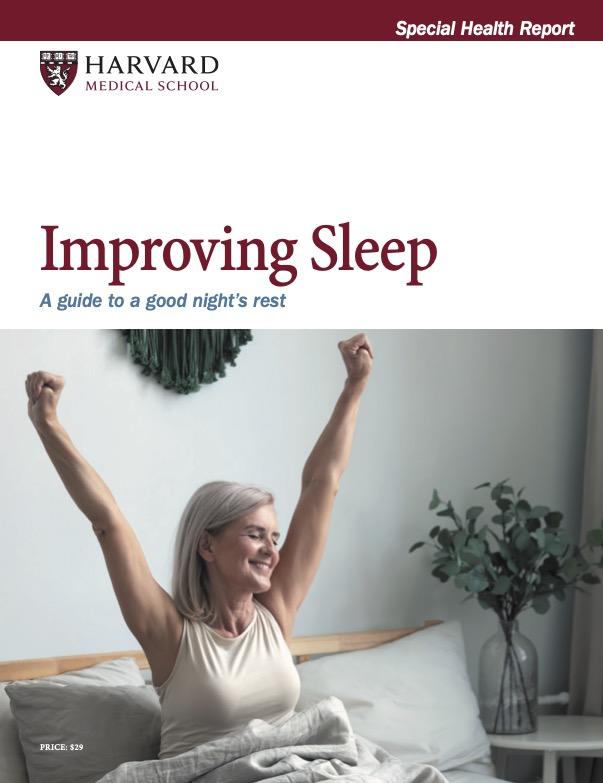
When you wake up in the morning, are you refreshed and ready to go, or groggy and grumpy? For many people, the second scenario is all too common. Improving Sleep: A guide to a good night’s rest describes the latest in sleep research, including information about the numerous health conditions and medications that can interfere with normal sleep, as well as prescription and over-the-counter medications used to treat sleep disorders. Most importantly, you’ll learn what you can do to get the sleep you need for optimal health, safety, and well-being.
How much sleep do I need?
Guidelines recommend adults ages 18 to 60 get at least seven hours of sleep a night.
As people age, this number can change. Those ages 61 to 64 need seven to nine hours, and those ages 65 and older need seven to eight hours. Some people may require more or less.
Children need more sleep. Guidelines suggest that toddlers (ages 1 to 2 years) require 11 to 14 hours of sleep per day (including naps). Preschoolers (ages 3 to 5) should get 10 to 13 hours (including naps), and school-age children (ages 6 to 12) need nine to 12 hours. Teenagers need eight to 10 hours of sleep.
Why can’t I sleep?
When people have trouble sleeping over a long period, it may be related to a sleep disorder like insomnia or sleep apnea.
If you suffer from insomnia, you may have trouble falling asleep, wake up too early, or wake up periodically during the night. Almost everyone has episodes of insomnia at some time, but insomnia is not a short-term problem for everyone. Insomnia is classified as chronic when it happens at least three nights per week for three months or more.
Sleep apnea is a disorder causing people to stop breathing for short periods during sleep. Apneas disrupt a person’s ability to get a good night’s sleep, making them less alert during the day.
What is insomnia?
Insomnia, the most common sleep disorder, is difficulty getting enough sleep or sleeping without interruption. Common symptoms of insomnia include:
- difficulty falling asleep
- waking up periodically during the night
- waking up in the early morning but not feeling rested
- feeling tired, anxious, and irritable during the day
- trouble concentrating.
Daytime and bedtime habits are common causes of short-term insomnia. Contributors to short-term insomnia include:
- stress or anxiety
- a change in sleeping environment (staying at a hotel or relative’s home)
- an inhospitable sleeping environment (too hot, too cold, too bright, too noisy)
- an uncomfortable mattress
- pajamas that are too tight
- a bed partner who snores or has disruptive sleep patterns
- regularly watching television or reading for long periods in bed.
- eating too much before bedtime
- drinking alcoholic beverages before bedtime
- a high intake of caffeine during the day
- smoking
- exercising immediately before bedtime
- not exercising enough during the day
- taking a hot bath or shower before bed
- travel to a different time zone or high altitude.
Insomnia becomes chronic when it happens at least three nights per week for three months or more, and may be caused by a medical or psychiatric problem. Some common causes of chronic insomnia include:
- psychiatric illness, especially depression, anxiety, or post-traumatic stress disorder (PTSD)
- chronic medical illnesses, especially kidney disease, heart failure, or asthma
- chronic pain, especially arthritis, fibromyalgia, neuropathy, acid reflux, or cancer
- hormone imbalance, especially menopause or hyperthyroidism
- prescription medicine with insomnia as a side effect
- restless legs syndrome, a disorder that causes uncomfortable sensations in the legs that trigger movements like twitching or jerking
- obstructive sleep apnea.
Pregnant women also are particularly vulnerable to insomnia. Pregnancy can cause insomnia due to hormone changes, heartburn, leg cramps, restless legs syndrome, or the need to urinate more frequently. In addition, the unborn baby’s increasing size often makes it harder for the mother to find a comfortable sleeping position.
What treatments for insomnia can help me sleep better?
Sleep-promoting changes in your surroundings and daily habits are usually the best way to treat and manage insomnia. These include everything from exercise to food choices to sleep hygiene. Examples include:
- Follow a regular sleep schedule. Have a routine bedtime and wake up at roughly the same time each morning.
- Sleep in loose, comfortable clothing on a comfortable mattress.
- Eliminate sources of noise or bright lights that prevent or disrupt sleep. If noise from outside your bedroom can’t be eliminated, you can drown it out with pink noise like a fan or a recording of ocean waves or rain.
- Maintain a comfortable bedroom temperature.
- Cut beverages containing caffeine.
- Avoid heavy eating before bedtime.
- Eliminate alcohol. Many people experience wakefulness when alcohol effects wear off. Alcohol also suppresses REM sleep, the stages of sleep when dreaming occurs.
- Exercise daily, preferably at least four hours before bedtime.
Nearly half of insomnia cases stem from psychological or emotional problems such as stress, depression, or anxiety. Depression and anxiety may be bidirectional with insomnia, meaning that the insomnia makes the mood disorder worse, and the mood disorder contributes to the insomnia. With proper treatment of the underlying cause, the insomnia usually recedes, though treating both the mood disorder and insomnia may be more effective.
The two main approaches to treating insomnia caused by these issues are behavioral therapy and medications.
Cognitive behavioral therapy (CBT) for insomnia is considered first-line treatment for insomnia, and includes a number of behavioral therapies including:
- Relaxation therapy: special techniques to quiet the mind and relax the muscles
- Sleep restriction: a program that initially restricts time in bed to build the drive to sleep, then gradually increases the amount of time spent in bed
- Reconditioning: a program that teaches the person to associate the bed only with sleeping (and sexual activity) by going to bed only when sleepy and avoiding daytime naps.
CBT for insomnia can be done with a sleep psychologist or sleep physician. It can also be done online using web-based programs that have been developed by sleep specialists.
Medications for insomnia
Prescription medications help some people with insomnia, but it’s best to use them at the lowest effective dose and for the shortest possible period. These include sedative hypnotics that slow activity in the brain to help you fall asleep. Benzodiazepines, which are also used to treat anxiety, are related medications that may also help you fall asleep. However, both groups of medications can be habit-forming or have the potential to be addictive. Other classes of medications that may help treat insomnia include some antidepressants, which are typically prescribed in doses lower than those used to treat depression, and dual orexin receptor antagonists, a newer type of medication that blocks the effect of orexin, a neurotransmitter that keeps people awake.
Over-the-counter sleep aids that contain an antihistamine as the primary active ingredient can be used once in a while. Antihistamines are sedating and generally safe when taken as directed for brief periods, particularly for allergies. But they can cause side effects like nausea and, more rarely, fast or irregular heartbeat. They are usually not recommended for adults over the age of 65 because they can cause anticholinergic side effects such as confusion, dry mouth, or blurred vision. They can also build tolerance quickly, meaning the more often you take them the less likely they are to make you sleepy.
Melatonin, the sleep hormone, is not actually recommended for treatment of insomnia. It is used to treat disorders of sleep timing. However, a medication called Rozerem, which is a melatonin receptor agonist, may help and can be prescribed by your doctor.
If insomnia is a symptom of a medical disorder, treating the underlying problem may be all that you need. For example, treating restless legs syndrome with specific medication or sleep apnea with a CPAP machine can markedly improve sleep quality.
What is sleep apnea?
Sleep apnea is a sleep disorder that causes people to stop breathing for short periods during sleep. These periods are called apneas. Apneas usually last between 10 and 30 seconds. In severe cases, apneas can happen hundreds of times each night.
Sleep apnea is often caused by a relaxed tongue and throat tissues settling into a position that blocks your airway. Your body reacts to sleep apnea by releasing adrenaline-like “alarm” hormones so you will awaken and resume breathing. Sometimes people wake up and cannot fall back asleep, but often people are not aware they are waking up at all. Obesity is a common cause of sleep apnea, though not all people with sleep apnea are overweight. Many people with sleep apnea don’t realize they have it.
Sleep apnea symptoms include loud snoring, excessive sleepiness during waking hours, morning headaches, and dry mouth. Some people with sleep apnea also wake up multiple times per night to use the restroom. People with untreated sleep apnea are up to seven times more likely to be involved in motor vehicle accidents, and have a higher risk of developing high blood pressure.
There are two types of sleep apnea:
Obstructive sleep apnea. This is by far the more common type of sleep apnea. It occurs when the upper airway becomes partially or completely blocked. It can be blocked by large tonsils, a large tongue, or airway tissue.
Central sleep apnea. There is an interruption from the signal of the brain to the diaphragm, the muscle that helps you breathe. Central sleep apnea is more common in people with heart disease, including heart failure and atrial fibrillation. It can also occur after strokes, at high altitudes, or due to certain medications, especially opioids.
Sleep apnea lasts depends on its cause and on the effectiveness of treatment. Generally, sleep apnea is a chronic disorder. Central sleep apnea depends on treatment for the underlying neurological or cardiovascular disorders.
Sleep apnea may be diagnosed in a sleep lab or home testing.
How is sleep apnea treated?
Many people use a continuous positive airway pressure (CPAP) machine to treat obstructive sleep apnea. A mask fits over your mouth and nose and the machine uses mild air pressure to force your airways open.
Some people with obstructive sleep apnea partially close their airway when the jaw moves backward during sleep. These people may benefit from wearing a fitted mouthpiece at night that keeps the jaw forward.
Many people with sleep apnea are overweight. Losing weight could make a big difference and in some cases cures sleep apnea.
Some people with obstructive sleep apnea only have problems when they lie on their back. In that case, you can try sleeping on a wedge pillow or wear a stuffed fanny pack around your waist to keep you from rolling onto your back.
Surgery may be considered for some people if other therapies are unsuccessful.
Another treatment for moderate to severe sleep apnea is an implanted pacemaker-like device called a hypoglossal nerve stimulator. This treatment features a device similar to a pacemaker that’s surgically implanted in the upper chest. The FDA-approved system, called Inspire, monitors your breathing and, if needed, stimulates a nerve to prevent the tongue from falling backward.
For central sleep apnea, treating any underlying neurological or cardiovascular disorders may address the problem. Stopping medications that cause central sleep apnea may resolve the problem. PAP therapy may also be helpful in some cases, but others may need oxygen or medication.
What are other common sleep disorders?
Sleep issues also can be caused by other sleep disorders or conditions, like restless legs syndrome, periodic limb movement disorder, parasomnias, and narcolepsy.
Restless legs syndrome (RLS) is an exasperating condition that triggers abnormal sensations in the legs (and occasionally the arms) and an irresistible urge to move them. Sleep deprivation is a significant problem for people with RLS, as the symptoms are most prominent at night – or, in many cases, occur only at night. RLS symptoms may make it difficult to fall asleep or stay asleep, compelling the person to get in and out of bed often.
Periodic limb movement disorder (PLMD) is a neurological condition that causes people to kick and jerk their arms and legs throughout the night. Their leg and arm muscles involuntarily contract about every 20 to 40 seconds, so the movement may be repeated hundreds of times a night and can cause brief arousals. Episodes may last only a few minutes or continue for hours, with intervals of sound sleep in between. They usually don’t occur continuously throughout the night but cluster in the first half of the night.
Narcolepsy is a disorder that affects the sleep/wake cycle. People with narcolepsy experience bouts of extreme daytime sleepiness and tend to fall asleep suddenly at inappropriate times.
______________________________________________________________

